








Health and Sanity category archive
We Need Single Payer 0
We are headed to a society with three classes: the insurance executive bonus babies, the insured, and the dying.
Even the low-income children who were not rejected had to wait an average of 42 days for appointments for urgent conditions such as diabetes, seizures, asthma, or a bone fracture – 22 days longer on average than children with private insurance.


We Need Single Payer 0
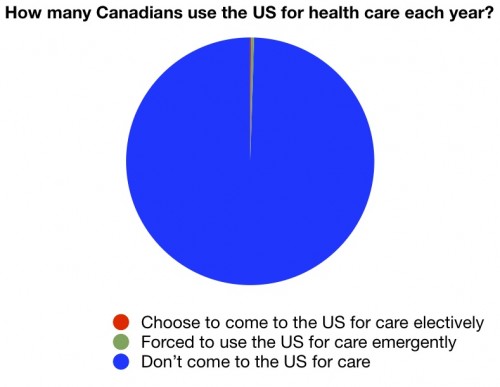
Jay Bookman of the Atlanta-Journal Constitution debunks the lie that competition will magically reduce the cost of health care to consumers.
Here’s one of his charts. Follow this link to read the article.

We Need Single Payer 0
At Bloomberg, Paul Ryan has an article claiming that competition will lower health care costs, a favorite claim of righties.
Missing is reality. Obtaining medical care is not like buying an MP3 player.
- In much of the country, there is no competition. In my part of the world, one hospital company controls almost all the hospitals. If the EMTs have to transport me, they get to choose among Sentara, Sentara, Sentara, and Sentara.
- If someone has, say a heart attack, he or she doesn’t get estimates for the cost of treatment. He or she likely isn’t even conscious so as to be able to shop around.
- If a woman is having a baby (something that gives more notice), she doesn’t shop around for a delivery room; she goes to the hospital her doctor uses.
- If I need an EKG, I’m not going to shop for a new lab; I’m going to where my doctor sends me.
Republican paeans to market competition are no more than empty propaganda to perpetuate oligarchy, promote monopoly, and placate the most significant Republican constituency: Wall Street bonus babies.
Or maybe they’re just all smoking dope.
We Need Single Payer 0
Also, the Atlanta Journal-Constitution has a long story about hospital markups, that is, what persons with no insurance have to pay. A nugget:
That’s largely because people don’t shop for medical care and hospitals don’t provide cost estimates, Anderson said.
“There is nobody saying to [the hospitals] on behalf of the uninsured and a few other groups that they can’t do it,” Anderson said.
“You just had a heart attack or your appendix burst, so you can’t negotiate a price and you wouldn’t know how much it cost even if you could,” he said.
Via Balloon Juice.
Solution Looking for a Problem 0
This is not news.
This is why cooking was invented.
Also, 136 samples?
The new estimate is based on just 136 samples of beef, chicken, pork and turkey purchased from grocery stores in Chicago; Los Angeles; Washington, D.C.; Flagstaff, Ariz.; and Fort Lauderdale, Fla.
(snip)
The new study found more than half the samples contained Staphylococcus aureus, a bacteria that can make people sick. Worse, half of those contaminated samples had a form of staph that’s resistant to at least three kinds of antibiotics.
I am more concerned about the “resistant to at least three kinds of antibiotics” part.
We Need Single Payer . . . 0
. . . because a health insurance industrial complex whose primary purpose is paying the country club memberships of its executive bonus babies by denying health care is likely to have a whatchamaycalllit oh! right conflict of interest:
MedSolutions was hired in July 2009 to review claims before doctors administered tests such as knee MRIs and CT scans of the brain. The firm stood to lose money if it did not reach its 20 percent savings target, according to the report. Such a contingency violated state law. It was removed from the contract last summer.
We Need Single Payer 0
Matt Ruben, writing at Philly dot com, considers the Republican war on the sick and infirm.
It’s all about the country club memberships. Here’s a bit:
So the private insurers, and the financial firms heavily invested in them, stand to make lots of money from 40 million new customers, as all of the nation’s seniors would remain in the private market at age 65 instead of being able to get Medicare. And you, your children and your grandchildren would subsidize those profits by paying more and more to the insurers during all those years after age 65.
To add insult to injury, the GOP plan also calls for more tax breaks for the wealthiest Americans. So the vast majority of us, who really need Medicare, wouldn’t even get a tax break to help offset the increased costs.
It’s a scam, pure and simple, another front in a class war being waged by the relative few who get rich off their investments, on the majority of Americans who survive primarily by working for a living.
We Need Single Payer 1
The high cost of health care in the U. S. all about the country club memberships–and not for the doctors. Derrick Jackson in the Boston Globe:
IF MASSACHUSETTS is the model, then national health care reform is ultimately doomed. That can be the only conclusion after this week’s news that Blue Cross Blue Shield of Massachusetts is in the homestretch of paying out nearly $28 million in retirement and severance pay in the last five years to its last two CEOs.
(snip)
But Massachusetts is not alone. Blue Cross Blue Shield of Michigan doled out $1.54 million to 34 board members, even as the company was losing $145 million, the Detroit Free Press reported in 2008. In 2009, Blue Cross Blue Shield of North Dakota, nationally touted as a well-run alternative to the vilified “public option,’’ was exposed for paying out millions in bonuses, charter flights, Caribbean junkets, and severance for a CEO who had been busted for drunk driving.
Read the whole thing. Then you will need a doctor for those heart palpitations.
We Need Single Payer 0
Stringfield, 31, had been laid off in October from her job as a retail manager at an Exxon-Mobil station. Her health coverage ended on Dec. 31, and she wasn’t able to immediately find insurance she could afford on her unemployment check.
Sitting at her kitchen table in Chesapeake recently with Katelyn and 3-year-old Brianna, Stringfield could only shake her head. “I don’t know. I really don’t know,” she said. “I could care less about me.”
This lady was able to get insurance for her daughter through the state.
Many cannot. Later in the same article:
Most children without coverage live in households with income less than 200 percent of the federal poverty level but with at least one adult working, according to a report from the foundation. More than 50 percent are white, and about 26 percent are black. All but a few are U.S. citizens.
Your Health Care Dollars at Work 0
In case you wonder where the money goes:
Fired “without cause” by the hospital’s board of directors on Wednesday, Graham is now entitled to nearly $1 million in severance pay, according to his contract, which the hospital provided to The Daily News on Friday.
We Need Single Payer 0
Noz reports from the trenches, where’s he’s fighting to get coverage for his son (emphasis added).
His son has a pre-existing condition. He’s alive:
Also, this, for which I have no words.
We Need Single Payer (Updated) 0
My reading of Virginia blogs tells me that this ruling from this judge was not a surprise. Right now, he’s the “one” in the phrasel “two-to-one against.”
Importantly, Judge Hudson did not take the next step and rule that the entire law must be declared void immediately, as the state of Virginia had insisted. The individual mandate does not kick in until 2014, but other provisions of the law are already being implemented. The adverse ruling doesn’t stop that.
Addendum:
TPM looks at legal flaws in the ruling:
Kerr and others note that Hudson’s argument against Congress’ power to require people to purchase health insurance rests on a tautology.
We Need Single Payer 0
Anti-health care reform wingnut Congressman throws fit because it’s going to be a month before his government health care benefits kick in.
Meanwhile, back in the real world, The Chicago Tribune reminds us that the American health care insurance industry has cake, eats it too. From the Chicago Tribune:
The findings are similar to those of a 2009 report by the National Women’s Law Center that examined 3,600 individual policies across the country and found that only 13 percent provided maternity coverage.
The problems don’t stop there. If a woman is pregnant and applies for coverage in the individual market, insurers generally consider her pregnancy a preexisting medical condition and deny coverage.
We Need Single Payer, Fee Hand of the Market Dept. 0
Gotta pay those country club memberships:
(snip)
The lawsuit said that Michigan Blue Cross Blue Shield intended to raise hospital costs for competing health care plans and reduce competition for the sale of health insurance.
“As a result, consumers in Michigan are paying more for their health care services and health insurance,” Assistant Attorney General Christine Varney, who runs the Justice Department’s antitrust division, told reporters.
BCBS, natch, claims that it has done nothing improper. Follow the link for the details of its denials.
We Need Single Payer 0
The BBC reports on a study by Columbia University. You can see the study here. From the BBC report:
The Columbia University report rejects claims that factors such as obesity have shortened life-spans for Americans relative to other wealthy nations.
The study blames reliance on costly and fragmented specialised care, and calls for systemic reform.
(snip)
“We speculate that the nature of our health care system – specifically, its reliance on unregulated fee-for-service and specialty care – may explain both the increased spending and the relative deterioration in survival that we observed,” the authors wrote.
“If so, meaningful reform may not only save money over the long term, it may also save lives.”
Making money has become the goal of the United States health care industrial complex (though I must emphasize not of doctors, nurses, technicians, and others who deal daily with sick people) as what used to be non-profit hospitals, clinics, and insurance companies have become “for profit.”
As long as the goal of the health care industrial complex is making money, that’s what it’s going to put first.
Why Science Reporting Stinks 0
Because it doesn’t tell enough and it misses the point.
Case in point missed:
The Daily Progress reports on a study by the University of Virginia in conjunction with the Dial Soap people. The study purports to prove that alcohol hand sanitizers–the kind the everyone set out in the waiting room last flu season–aren’t very effective against colds and flu.
Here’s the two crucial pieces from the Daily Progress story:
(and the last paragraph)
Turner said his findings aren’t cause for panic. He said studies have shown that hand sanitizer is effective for gastrointestinal diseases, particularly in the developing world. According to a 2002 CDC study, sanitizers did a better job reducing bacteria on hands than did antibacterial soap.
The Daily Progress is the hometown paper for Charlottesville, Va., the site of the University of Virginia. The version that went out over the wires is much shorter, more like this.
To evaluate this, the reader needs to know how large the sample was. The results are given in pseudo-percentages, such as “42 our of 100.” A someone skimming the story could conclude that 100 persons were in the sample, but that’s neither stated nor implied under a careful reading.
I also find the conclusion questionable. Here’s the lead from the Daily Progress and most wire versions I’ve found:
Using alcohol-based hand sanitizer doesn’t significantly decrease how often someone is infected with a cold or flu, a University of Virginia study has found.
Look at the figures: the incidents of colds was reduced by 9 per 100, to use the story’s construct. That’s 18%. Given the pervalence of colds, that’s not insignificant.
The incidence of flu was reduced from 15 per 100 to 12 per 100. Let’s do the math:
-
3 case reduction divided by 15 cases in control group = 20%
Again, not an insignificant reduction.
I suspect that the stories are based on a UVa press release; I haven’t looked for it and it’s not the issue any way. The issue is that the numbers do not support the headlines. If the headlines are based on the wording of press release, reporters ought to have done the math and pressed (heh) for more information.
Frankly, an ad campaign that X may reduce your chance of catching the common cold by 20% would be a pretty good ad campaign, especially if it didn’t include fully dressed people in bath tubs.
Full Disclosure: I don’t commonly use alcohol hand sanitizers unless I’m visiting someone in the hospital, something I fortunately haven’t had to do lately.
The Fee Hand of the Market 0
In the old days, it would be called a “Trust.” Bloomberg analyses the effects of overpowering market share in health care:

It turns out that Logsdon didn’t know something that his insurance company does: Sutter Health Co., the nonprofit that owns Sutter Davis, has market power that commands prices 40 to 70 percent higher than its rivals per typical procedure — and pacts with insurers that keep those prices secret.
Sutter can charge these prices because it has acquired more than a third of the market in the San Francisco-to-Sacramento region through more than 20 hospital takeovers in the last 30 years, according to executives of Aetna Inc., Health Net Inc. and Blue Shield of California, who asked not to be named because their agreements with Sutter ban disclosure of prices.
Read the whole thing.
We Need Single Payer 0
From the Philadephia Inquirer:
But a local hospital group says the fastest-growing part of what hospitals call “bad debt” – basically, uncollectible bills – is money owed by patients who have insurance.
As employers dump costs onto workers, so now are workers dumping costs onto hospitals.
Because of rising deductibles and cost-sharing rules, patients are increasingly faced with bills that would have been unusual for someone with insurance a few years ago.
Read the whole thing. It goes on to point out that
- Hospitals are increasing asking for payment, if not up front, then very quickly. If you are admitted, you might be visited by a “financial counselor” before you get your first lab work back.
- Persons who have been released sometimes pay their cable bills before they pay the hospital bills. (Aside: This is not surprising. They probably have enough money to pay the cable bill. Hospital bills can be more than they will make in a decade or a lifetime.)
- Hospitals don’t much like the current system either.
The larger story is that hospitalization is getting so expensive that only the very very rich can afford it. The whole damn system is not just broke, it’s broken.
Insurance that doesn’t insure, but you can bet your bippy it stills pays the country club memberships of insurance execs.