


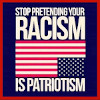





“That Conversation about Race” category archive
Tales of the Trumpling: Snapshots of Trickle-Down Trumpery 0
Make no mistake. Trump may be gone at noon today, but the Trumpling will continue. He has given Trumplers permission to Trumple, and they will not stop easily.
As my brother said, that bunch is capable of anything.

The Voter Fraud Fraud 0
Jamelle Bouie looks at the long history of Republican attempts to gut out the vote and at the racism that underlies them. A snippet (emphasis added):
Not that this was a shock. As an accusation, “voter fraud” has been used historically to disparage the participation of Black voters and immigrants — to cast their votes as illegitimate. And Obama came to office on the strength of historic turnout among Black Americans and other nonwhite groups. To the conservative grass roots, Obama’s very presence in the White House was, on its face, evidence that fraud had overtaken American elections.
Still Rising Again after All These Years 0
Vanessa Williamson, Sam’s guest, historian Vannessa Williamson, discusses the ways in which white persons rhetoric and tactics in rolling back Reconstruction continues to affect our politics today.
It’s a relatively long segment, but well worth a listen. As you listen to Williamson talk about events a century and a half ago, you will find disquieting parallels with what passes for discourse today.
A Notion of Immigrants 0
The writer of a letter to the editor of the Las Vegas Sun has a question.
Lies and Lying Liars 0
Paul Krugman marvels at the mendacity. A snippet:
For the big thing that has changed since Hofstadter wrote is that one of our major political parties has become willing to tolerate and, indeed, feed right-wing political paranoia.
This coddling of the crazies was, at first, almost entirely cynical. When the GOP began moving right in the 1970s, its true agenda was mainly economic — what its leaders wanted, above all, were business deregulation and tax cuts for the rich. But the party needed more than plutocracy to win elections, so it began courting working-class whites with what amounted to thinly disguised racist appeals.
Those “racist appeals” he mentioned weren’t even “disguised,” not even “thinly,” to the eyes of anyone who pays attention.
A Picture Is Worth 0
At the Inky, Tim Tai explains.
Immunity Impunity
0
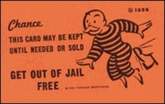 The card that enforcers always use to trump their way out of being held responsible for their venality.
Mob Fuel 0
Nassir Ghaemi, writing at Psychology Today Blogs, explores the psychology of the current federal administrator and of his dupes, symps, and fellow travelers, and the interaction between them led to riot and destruction.
I’ll not paraphrase or excerpt it. I just commend it to your attention.
Still Rising Again after All These Years 0
If you want to follow news of the “breaching” (why would they call it that instead of what it is–an attack and occupation?) of the Capitol, I recommend the WTOP radio stream. You’ll get more news and fewer no pictures.
The original post scheduled for this update is below the fold. Methinks it quite relevant to today’s events.
Mummers of Discontent 0
In the three decades I lived in the Philadelphia area, I never–not once–had any desire to go to the Mummers Parade. The idea of standing on Broad Street in freezing temperatures did not appeal to me as the way to usher in the New Year. That some of the Mummers had a history of less than proper and considerate behavior was not a factor in my thinking; the thermometer was.
In recent years, some of the Mummers have been criticized for racist and bigoted undercurrents (in some cases, overcurrents) in their costumes and conduct. Note that I said “some of,” as the parade is composed of many different groups; pretty much the only thing they have in common is the parade.
At the Inky, Daniel Gold, one of the marchers, writes of wanting to see this aspect of Mummery improve and considers why such improvement is a struggle. His comments are perceptive and can be extended to the larger society. Here’s a bit (emphasis added):
To be blunt, most Mummers don’t understand the problem. And not enough are interested in figuring it out. They don’t feel racist, so they can’t understand why the public would see them that way. They view individual acts of racism as individual problems, and assume if they’re not the one doing it or getting caught, they’re not the problem.
But that’s not how it works. Racism is complex. Though it often occurs at the individual level, it is a cultural problem. In western society, it has artificially pit Black against white and historically created a hierarchy placing white at the top. When people speak of systemic racism, this is what they mean. In America, we all live with this and play a part. We either work to combat it or escalate it.