







“That Conversation about Race” category archive
The Eye of the Beholder 0
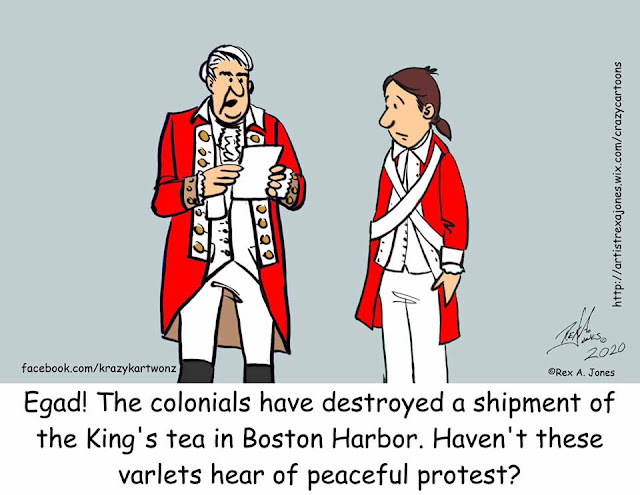
One of the lessons of history is that a simmering pot eventually boils over. Too often, it boils over to no effect other than a messy stove top. We are at one of those boiling over points now.
It’s up to the polity–what’s left of it–to determine whether we will turn off the burner or simply clean up the stove top while leaving the pot to simmer until the next boiling over point.
Image via Job’s Anger.

A Divider, Not a Uniter 0
SeattlePI columnist John Connelly looks at the recent riots in reaction to the killing of (yet another) black man for being black. He points out that this is but one in a long series eruptions in the history of white American racism and the legacy of America’s original sin.
Here’s a snippet:
No antidote for endemic racism has been found, not even the election of a Black president. The man who succeeded him spread to falsehood that Barack Obama was born in Kenya. It “spikes” with periodic killings by police. The news media cover protests and riots, but give far less attention to what makes even nonviolent protesters angry.
We’re badly equipped for this spike. President Donald Trump is a deliberate divider, going so far as to encourage violence. . . .”
If One Standard Is Good, Two Must Be Better 0
Thom comments on the double standard.
Suborning Violence 0
The SPLC calls out Donald Trump’s tweet of approval.
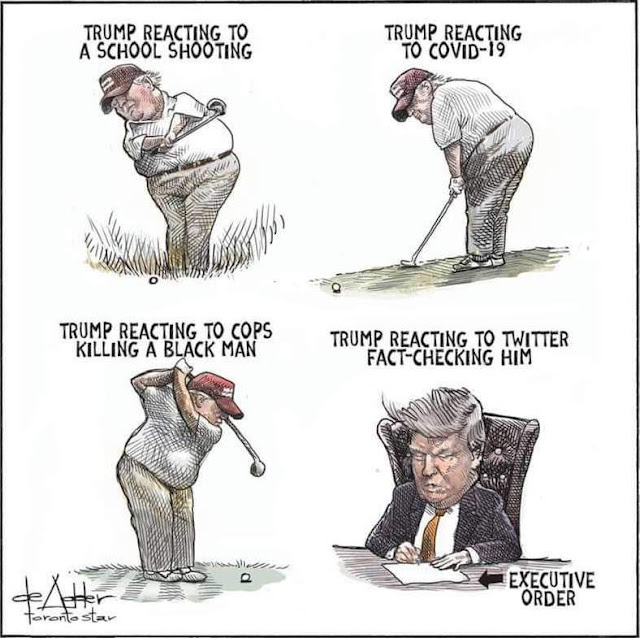
Summary Injustice 0

At AL.com, John Archibald, a white (like me) American, points the finger.
Here’s his conclusion; follow the link for his reasoning:
This is on you, White America.
On me.

Sunday in the Park with Karen . . . 0
. . . watching our feathered friends.
Scapegoating Goes Viral 0
“It’s those people you-know-who-we-mean.”
I’m a Southern boy.
I know racism when I see it.
Guilty Until Proven Innocent 0
Using the killing in Brunswick, Georgia, of Ahmaud Arbery as a starting point, Jennifer Rae Taylor and Kayla Vinson explore the history of lynching in America. An excerpt:
“[The South’s] police system,” scholar W.E.B. Du Bois wrote in 1903, “was arranged to deal with Blacks alone, and tacitly assumed that every white man was ipso facto a member of that police.”
Even after death, Arbery was denied the status of victim, and his killers were shielded from being treated as suspects. As during the lynching era, the mere claim that the dead black man deserved what he got was enough to satisfy the authorities and absolve the undisputed killers. In hundreds of the lynchings EJI (the Equal Justice Institute–ed.) has documented, the victims’ names are not known because newspaper reports did not bother to investigate even that deeply.
I commend the full article to your attention.