








Health and Sanity category archive
Speaking of Political Thuggery . . . 2
. . . as I was in the previous post, score one for the forces of truth, justice, and the American way over thuggery.
Afterthought:
This is why I have generally ignored all the agonizing over how the decision would turn out.

We Need Single Payer 0
PoliticalProf had to go to the doctor, which set him to wondering (emphasis added):
What has struck me throughout the whole debate about healthcare in America is how few people like me . . . can then take the next step and ask: what if I didn’t have the money? What would I have done?
Read the rest.
Everybody Must Get Sick 0
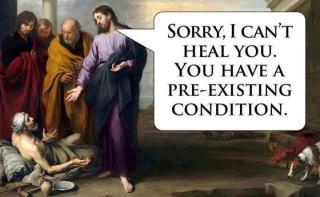
In case you wondered why the Republican Party is adamantly opposed to reforming the US health care system, consider this bit from MarketWatch:
For people in the top 1% of income earners, avoiding those two tax provisions would translate into savings of, on average, about $21,000 per year, according to the Tax Policy Center, a joint venture of the Brookings Institution and Urban Institute.
And the richest Americans — the top 0.1% — would avoid about $125,000 more in taxes per year on average if the health law is overturned.
It is living up to its core mission: to make the rich, richer and the poor, poorer.
Making the poor sicker and the sick poorer is just collateral damage.
We Need Single Payer 0
Thom explains why the rest of the world thinks we are crazy:

We Need Single Payer 0
The Denver Post talks with a Taiwanese immigrant who is aghast at the expense and inefficiency of the US health insurance industry. A nugget:
But he’s not going to get 24 times better health care, which he has discovered as well. “One day my daughter got sick. We sent her to hospital, and imagined this society has good hospitals and advanced technologies that exist to serve people. We waited from 7 p.m. to 11 p.m. in emergency room. With this speed of service, I began to question my understanding of the word ’emergency.’?” He says that he looked it up, just to verify that “emergency” is the word for something that requires immediate action.
Read it.

We Need Single Payer 0
At the Guardian, an English reporter forced to visit the ER tells of his experience with U. S. health care. A nugget:
No amount of fresh towels and edible breakfasts can make up for the feeling that your health is less important than the capacity of your chequebook.
We Need Single Payer 0
Sam Seder interviews Wendell Potter on tactics used by health insurance companies to keep customers in the dark about coverage and costs.
What they are most desirous of insuring is the executives’ country club memberships.
We Need Single Payer 0
In the Tampa Bay Times (the renamed St. Petersburg Times), Robyn Blumner describes her treatment for cancer. After praising the doctors, she moves to the subject of billing (emphasis added).
First, trying to be an educated consumer of health services by understanding pricing schedules is like cracking Enigma code. Second, the way the medical establishment and private insurance system is organized ensures that Americans get impersonal, redundant medical care for the highest cost, a subject I will discuss in my next column.
Any one who has had the simplest test done at a hospital become bewildered by the flurry of bills: two or three from different departments of the hospital, one from each doctor, one from the janitor, several from persons you never heard of. It is easy to imagine that the process is impenetrable on purpose.
Republicans like to talk about shopping for health care as if it were like shopping for a television.
Try it.
The sleazy used car dealers down the side streets are paragons of openness and disclosure when compared with the business end of the health care industry.
We Need Single Payer 0
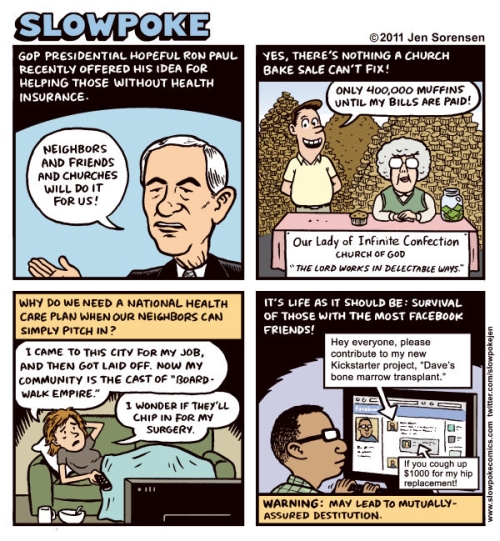
Life insurance has been described as a wager: You bet that you are going to die, the life insurance company bets you won’t, and you hope that they win the bet.
Of course, you know the death rate is the same everywhere, as Mark Twain observed: One per person.
Nevertheless, the gag points out what gets forgotten: insurance companies don’t want to pay claims; they want to pay the bosses’ country club memberships. Their business model is founded on not paying.
The Philadelphia Inquirer details the attempt of a severely crippled 27 year old woman–one whose hands and legs are too weak for her to maneuver herself–to get a modern wheelchair.
People who evaluate and fit patients for wheelchairs say cases like hers have become more common in recent months. They say many requests for the kind of chairs that patients like Lorey use – expensive, motorized units with multiple custom features – are being denied because insurers and Medicare officials are worried about high costs and fraud. Doctors, physical therapists, and patients must appeal the decision, or else the patients give up and accept lesser chairs.
“It’s gotten to the point where words are not enough to convince the medical directors” of insurers, said assistive technology professional Robert Townsend of Jeff Quip, a Boothwyn company that supplies complex chairs.
Experts said patients who fight – especially those who appeal in person – often can get the chair they need, but during the bureaucratic battle, they must make do with loaner chairs or lie in bed.

We Need Single Payer 0
So we don’t need special events like these:
So many people stood in line seeking dental care Friday than many were told to come back Saturday. Many of those who couldn’t see a dentist before the event ended were given information about dental clinics around the area.
Woodstock police estimated 2,300 to 3,000 people were waiting outside the church when the doors opened Friday morning at 5 a.m. Some had waited since Thursday morning.
The Galt and the Lamers, Competition Dept. 2
Price competition in health care: The fee hand of the market at work.
Such “trade secret” clauses are standard in the medical world and exempt from public records laws, they say. But the secrecy means that Jackson can’t compare its prices to what many other hospitals pay. That’s like a consumer going to buy a flat-screen TV and not knowing what others are paying for the same brand, said Curtis Rooney, president of the Health Industry Group Purchasing Association. “We call them gag clauses. … People can’t find out the best price.”
Free market.
Competition.
It is to laugh.
We Need Single Payer 0
Field reports from the field:
Follow the link for the citation.
We Need Single Payer 0
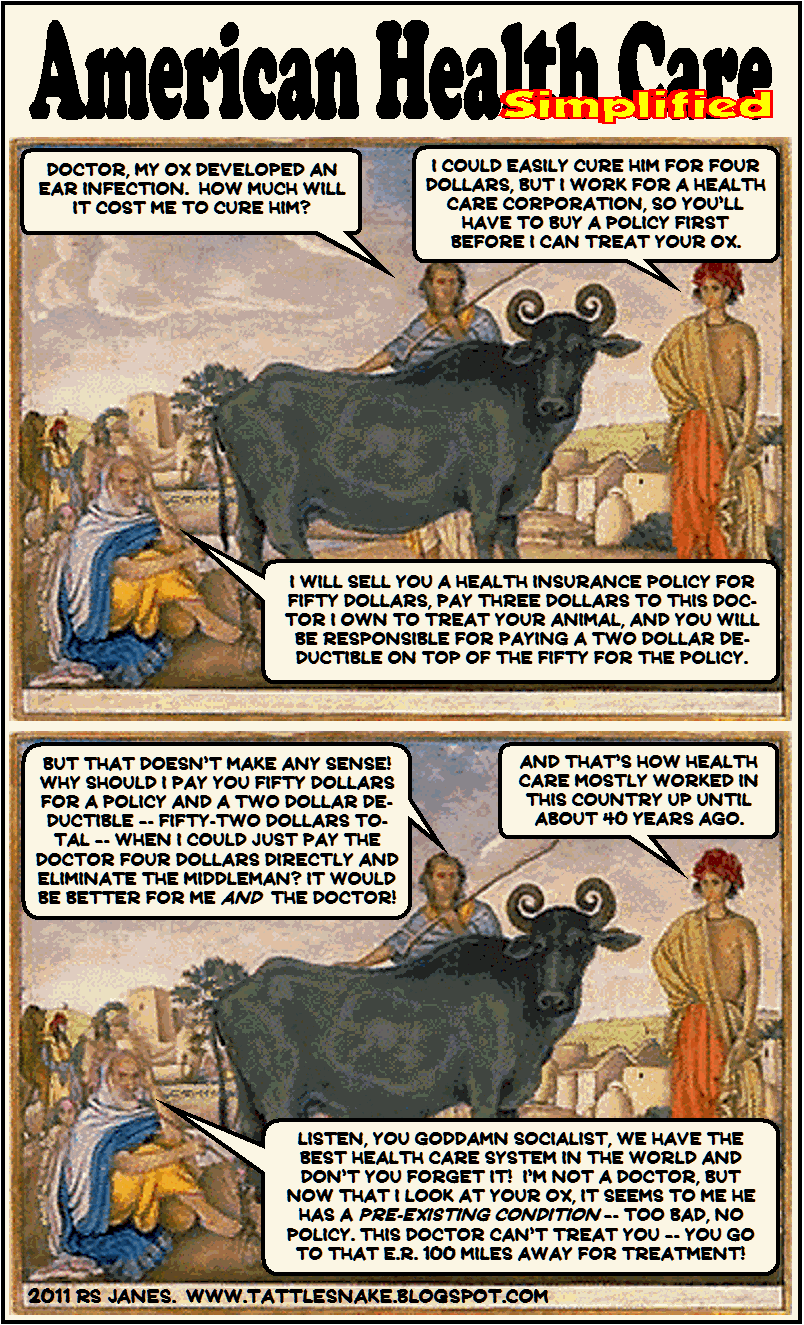
Not payola payers.