








“That Conversation about Race” category archive
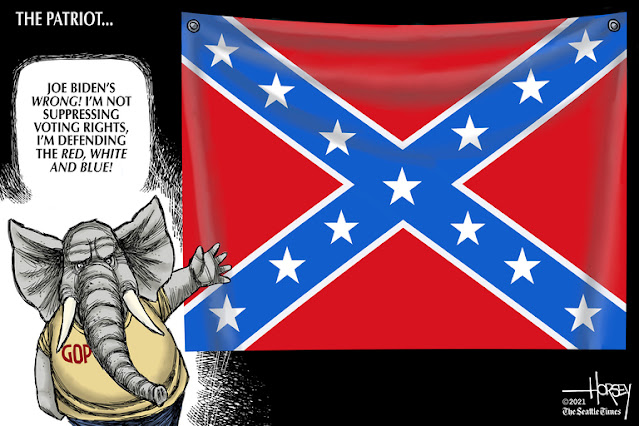
Limitations of Statues (Updated) 0
At the Idaho State Journal, Billie Johnson muses on the recent removal of statues, some Confederate, some not. She concludes
Follow the link to see how she reached that conclusion.
Addendum:
The page at the link appears to have been removed without explanation. Which is a damned shame, as it was an excellent article.

Karen Karen-Like 0
A Karen phones it in.
Don’t Believe the Hype 0
Artificial intelligence is indeed artificial, but it’s not intelligent.
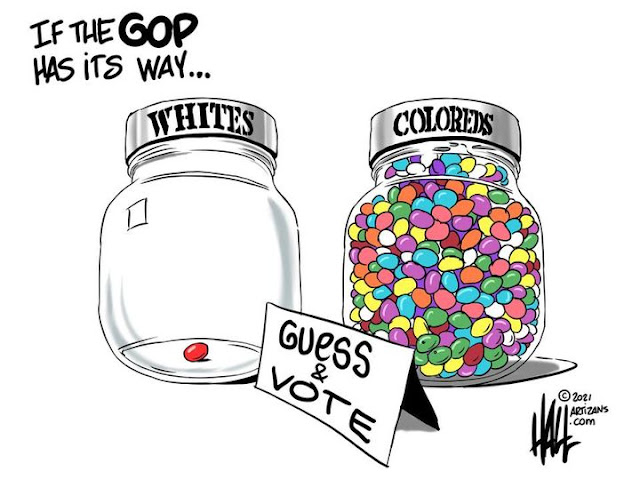
Cooking the Books 0
F. T. Rea remembers the whitewashing (you will pardon the expression) of Southern history.
Know-Nothings Redux 0
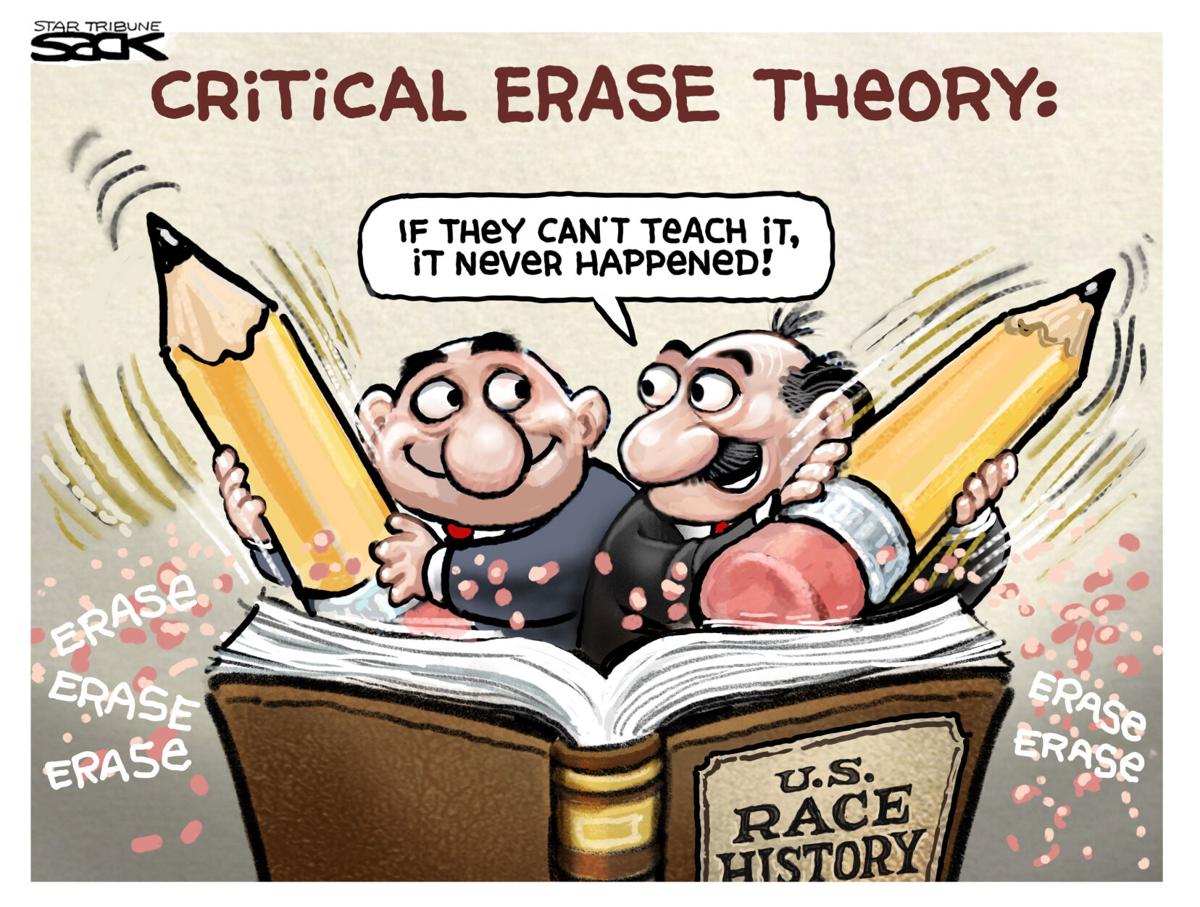
The editors of The Roanoke Times paired this image with a column by Leonard Pitts, Jr., who points out that
So how did it become this sudden four-alarm fire in the house of democracy? The answer is depressingly simple. It is this year’s War on Christmas. It’s sharia law, gay wedding cake, and New Black Panthers. Which is to say, it is this year’s spur by which the white right, more easily stampeded than a herd of cattle by a lightning strike, is prodded to feel resentful, frightened and besieged — and vote accordingly.
Follow the link for the rest.
A Notion of Immigrants 0
Dan Patrice suggests that renting out the National Guard to the highest bidder is not a good thing. A snippet (emphasis added):
Follow the link for context.
The Slave Patrol Amendment 0
Sam, Emma, and Howard University Professor Carol Anderson discuss the true origins of the Second Amendment to the U. S. Constitution.
Aside:
When I was in college, I worked a summer job with my local health department for three years. The health department’s facility had two men’s rooms, two women’s rooms, and two water fountains. It took me a while to realize that they were legacies of Jim Crow–that, at one point, they had been labeled “White” and “Colored.”
Later on, I remember my father’s saying to me shortly before he passed away, “I’m glad those days are gone,” in a clear reference to the Jim Crow segregation that both he and I grew up in.
But those days are not gone. merely in uneasy abeyance, and there are many that would bring them back.
Do the Math 0
This doesn’t add up. The protest is in no way based on reality, but it does show how susceptible some persons are to right-wing lies and race-baiting.
We are a society of stupid.
And of the hate-full.
Misdirection Play, “Look Away, Look Away” Dept. 0
At Psychology Today Blogs, Onnie Rogers discusses conservative’s current conniption over critical race theory; she argues that not talking about a problem, in this case, racism is not a way to deal it. The goes on to suggest that, at least to a degree, the conniption is a misdirection play. S snippet:
This move takes a giant step in the wrong direction.
(snip)
CRT does not teach children to be racist, nor does it teach them to hate themselves, each other, or their country. CRT meets children where they are, giving them the language and historical perspective to make sense of the racism they see today.

Nixon’s Southern Strategy Marches On 0
Thom examines the Republican Party’s strategy to flood the zone with excrement.
A Notion of Immigrants, “As Ye Sow, So Shall Ye Reap” Dept. 0
There is much gnashing of teeth and flowering of fulminations over the desire of migrants from Central America to migrate northward, ultimately to the United States. Those who bemoan immigration, particularly immigration of persons with (ahem) darker skin and foreign accents, want them stopped, ofttimes forgetting that, a generation or two or three ago, persons who were already here wanted to forbid their own ancestors from arriving on these shores.
Aviva Chomsky reminds us that the United States is neither an innocent bystander nor a blameless victim in this current northward migration.
(snip)
In Nicaragua, the Sandinista revolution succeeded in overthrowing the U.S.-supported Somoza dictatorship in 1979. Somoza’s corruption and violence had alienated even Nicaragua’s business classes, and a broad popular front implemented a mixed economy promoting popular organization, land reform and the socialization of basic services. But the Reagan administration saw this and similar revolutionary projects in El Salvador and Guatemala as stalking horses for communism. It helped Central American elites and militaries to overthrow governments and crush popular movements.
Aside:
Last night, at our DL gathering, we were discussing how persons once derided as “not white,” such as Irish and Italians, have been assimilated into whiteness. We wondered what group will be next.