








Drumbeats category archive
Wars and Mongers of War 1
Culled from a larger article about a veteran’s efforts to provide a means of therapy to other veterans by encouraging them to write about their experiences, here is the nasty truth that the mongers of war want you to ignore (emphasis added).
I encourage you to follow the link and read the rest.
The mongers of war want you to think that war is a John Wayne movie. In the movies, though, unlike in wars, everyone gets up and goes home whole after the shooting stops.
Read the rest, then ask yourself, “Why is it that men too old to serve are so eager for war?”
Old men lie. Young folks die.

Mobilization 0
Joseph J. Ellis, professor of history at Williams College, spots a trend.
The Mexican War began when President Polk cited an attack on American troops in Texas – troops he had deliberately placed there to provoke Mexico. The Spanish American War began when President McKinley claimed that the battleship Maine had been blown up by Spanish saboteurs; subsequent investigations showed that the explosion originated inside the ship, probably due to an accidental fire in the munitions compartment.
Read the rest to see how often this pattern has repeated.
The next time you hear the war drums beating, be very skeptical.
Wars and Mongers of War 0
In the Pittsburgh Post-Gazette, Dan Simpson counsels against heeding the war fever currently being spread by Republicans. A nugget:
The first of these is a deep-rooted sense of our own best interests. Most Americans understand fairly well that we don’t want our sons and daughters in miserable places such as Nigeria, South Sudan, Syria and Ukraine standing at risk to their lives between people who want to fight over something that has nothing to do with us.
The second is that we as Americans have a very short attention span. Notice, for example, that Syria, an intense passion not long ago, is now sloping off into channel-changing obscurity.
(snip)
The third grace that may save us from self-destruction through meddling in other people’s affairs is a decent sense of what is really important to us.
Do please read the rest.
Wars and Mongers of War 0
Bloomberg’s Pankaj Mishra, published in the Japan Times, questions the relevance of Cold War thinking–and Cold War thinkers–now that the Cold War has been over for almost a generation. He suggests that recent domestic drumbeating about Crimea is, at least in part, an attempt by Cold Warriors to regain their think-tank mojo (and their think-tank gigs).
Forced into premature retirement by the unexpected collapse of communism in 1989, this thinker re-emerged after Sept. 11, 2001, convinced there was another worthy enemy in the crosshairs: Islamic totalitarianism.
Unchastened by a decade of expensive, counterproductive and widely despised wars, these laptop generals have been trying to reboot their dated software yet again as Russian President Vladimir Putin formalizes his annexation of Crimea.
He goes on to suggest that confrontational Cold War thinking led to the Soviet invasion of Afghanistan, as the USSR reacted to its perceptions of American intentions. (We experience the long-term effects of that whenever we stand in a security line at an airport, for that nurtured the Taliban and other forms of Islamic political radicalism, including Al Qaeda).
Follow the link to his article for his arguments. Follow the second link to learn more about the common origins of the Taliban and Al Qaeda.
High Crimeas and Misdeamenors 0
Der Spiegel points out that, no, it’s not 1914 all over again once more. A snippet:
Wars and Mongers of War 0
Jon Stewart marvels at those who would snatch war from the jaws of peace.
The Daily Show
Get More: Daily Show Full Episodes,The Daily Show on Facebook
Meanwhile, Chauncey Devega dissects the compulsion of old men to send young men and women to their deaths, using Bill Kristol, leading drum-beater for the Great and Glorious Patriotic War for a Lie in Iraq, as an example. A nugget (do read the rest):
Jon Stewart via AMERICAblog.
The Face of Battle 0
The Face of Battle is a book that attempted to recreate for the reader the front-line soldier’s view of battle at Agincourt, Waterloo, and the Somme. It does not paint the pretty, romantic picture portrayed in your average movie or television show.
I have read it. You should too.
Here, Thom speaks of the face of battle. His words are directed to President Obama, as they were in the context of Syria, but they apply to everyone who casually advocates blowing stuff up (something, it should be noted, that President Obama does and did not do).
“All by Yourself, Alone” 0
Noz’s post title says it all.
Myth America 0
Eric Garland explores three American myths about America and war.
Here is his list of myths and a nugget from the discussion. Follow the link for a discussion of each myth and of how they have led us into misadventure.
- Myth #1: America has to act.
- Myth #2: America’s actions are benevolent.
- Myth #3: America can win wars.
. . . .
An uncritical acceptance of mid-20th century mythology is what led to such catastrophic strategic errors in America’s wars of adventure. The United States led a cadre of allies into what is historically known as the “Graveyard of Empires,” Afghanistan. While removing the Taliban from the failed state was an imperative, supported by moral justifictions and realpolitik, we should have known that the task of securing the country would require total focus and dedication. After all, President Jimmy Carter and Zbigniew Brzezinski suckered the Soviets into doing the exact same thing as a way to ruin them.
Parallels 0
Thoreau points out the words have meanings and may not mean what you think they mean.
Credibility Gaffe 0
Rajan Menon thinks that blowing up stuff in Syria is not relevant to America’s international “credibility.”
“Credibility” has great power in national security debates.
(snip)
In reality, the credibility gambit often combines sleight of hand with lazy thinking (historical parallels tend to be asserted, not demonstrated) and is a variation on the discredited domino theory. This becomes apparent if one examines how it is being deployed in the debate on Syria.
Making a futile and pointless gesture, one that is agreed will ultimately accomplish nothing, though, will most certainly undermine “credibility”; such is politics a la Animal House.
What Goeth before a Fall? (HInt: It’s Not Pride) 0
Follow the link.
This trap opened with the Iranian Revolution and continued with the defeat of the Soviet Union in Afghanistan. That historical event contributed to the fall of the Soviet Union but created a psychological trap for the West, that of invincibility. That led to the first Gulf War and insidiously and cumulatively developed into a direct threat to the West slowly dragging us into a vortex of barbarity, self-deception and degradation of political life.
And the answer to the question is
War, Because, If We Don’t, Who Will? 0
I write mail in response to this news report:
The Honorable Tim Kaine
United States Senate
388 Russell Senate Office Building
Washington, D.C. 20510Dear Mr. Kaine:
I see in today’s Virginian-Pilot that you voted for intervention in Syria because, to paraphrase your statement as quoted in the story, “Somebody should do something.”
As it appears that “doing something” will not end the civil war in Syria, will not bring peace in any form, will not, in fact, accomplish anything other than to blow up more stuff and people, I submit, sir, that “Somebody should do something” is not a sound basis for policy formation.
Copied to my other elected representatives incongruously assembled.
Consider it cc-sa.
The Fever Isn’t Catching 0
The resident curmudgeon at my local rag takes the temperature of this area, home of the largest complex of military bases in the world, and finds no sign of war fever.
In fact, quite the opposite.
Asking the Wrong Question Always Gets a Wrong Answer 2
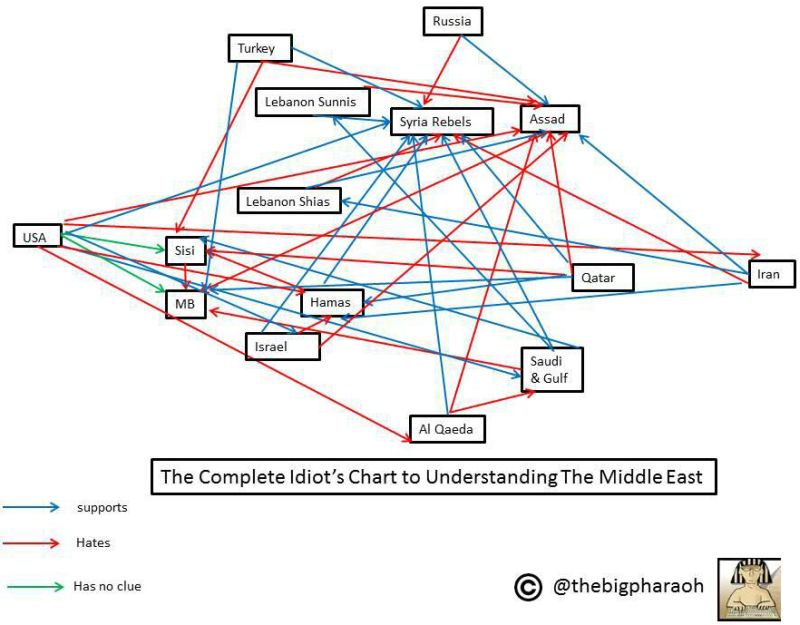
Judging from the headlines at the news sites I frequent, the Very Serious People seem to have decided that the crucial question regarding Syria is whether or not Syria used gas warfare. Framing the question in that way implies that, if the answer is yes, some sort of attack is ipso facto justified.
Ignoring that there is no such thing as a “surgical strike” except in the fantasies of warmongers, the actual question is lost in the frame:
What would an attack accomplish, other than killing some folks?
- Would it end the civil war in Syria?
- Would it topple the bad guys and elevate the good guys (ignoring, again, that there don’t seem to be any good guys on either side of the fighting, just innocents in the middle)?
- Would it protect the innocents?
- Is there anything outsiders can do to end the carnage?
No one argues that any of these can be answered with a “yes.”
The argument instead seems to be that, by raining remote-controlled death, our disapproval would be made manifest, as a God rains lightning from the sky.
In other words, it is the “diplomatic” equivalent of punching a hole in a wall out of frustration.
The frustration still exists, and now your hand is injured and you have to repair a hole.
This is not diplomacy.
This is the impotent masturbating with missiles.
Image via BartCop.
Deja Vu All Over Again (Updated) 0
Reg Henry is concerned about a rush to war.
That had the makings of a mistake anyway. A moderate rebel in Syria might be someone who allows you a blindfold before he chops your head off. If amnesia did not have such a national hold, we might remember that arming the Mujahideen when the Russians occupied Afghanistan seemed like a good idea at the time, but the blowback gave us Osama bin Laden and his pals.
(snip)
The same critics who urge Mr. Obama to war now will be urging him to more war later.
It appears that we can’t learn from history.
Hell, we can’t even learn from the present.
Addendum, Later That Same Morning:
PoliticalProf talks sense.
TSA Security Theatre 0
This is just stupid.
Resilience 0
Dick Polman reports on the drummers of the war drums. A nugget:
This is the same guy who declared on the eve of war 10 years ago that Iraq would be a breeze, that the Bush invasion would pacify a warring people: “There is a certain amount of pop psychology in America that the Shia can’t get along with the Sunni….There’s almost no evidence of that at all.” Ten years later, in Iraq, the Shiites and the Sunnis are still blowing each other up; for most of those 10 years, American soldiers died in the crossfire. But in Washington, there’s no shame and no penalty for being dead wrong, which is why Kristol still reigns on Sunday morning TV.
As Driftglass often points out, in the punditocracy, there is no penalty for being wrong all the time.